


The Murray River fleet was specialised: very shallow draft, relatively flat hulls, and either stern or side paddle wheels to operate in shallow, snaggy rivers.
Riverboat captains from the rivers past
The River Trade and Paddle Steamers
The Murray River trade, 1850–1980
An overview of the inland steam-navigation era on Australia’s Murray Darling system: its rise, what it carried, who ran it, and why commercial river trade largely disappeared by the late twentieth century.
Murray trade from the first paddle steamers in the 1850s through its nineteenth-century heyday, names leading captains and some of their vessels, summarises typical cargoes and the firms that organised trade, and explains the principal technical, economic and environmental reasons the industry declined by about 1980.
Origins and Growth (c. 1850s–1914)
Steam navigation on the Murray began in the early 1850s and quickly became the backbone of trade for Riverina and South Australian pastoralists and towns. Two figures are central to the story: William R. Randell, who built and launched the Mary Ann at Mannum in 1853, and Francis Cadell, whose Lady Augusta also demonstrated practical steam navigation of the Murray in 1853. Their voyages proved the river could carry substantial cargoes and passengers for long inland distances, and within a few decades hundreds of purpose-built shallow-draft paddle steamers and barges were operating on the Murray, Darling and Murrumbidgee systems. PS Marion & Mannum Dock Discovery Centre+2Wikipedia+2
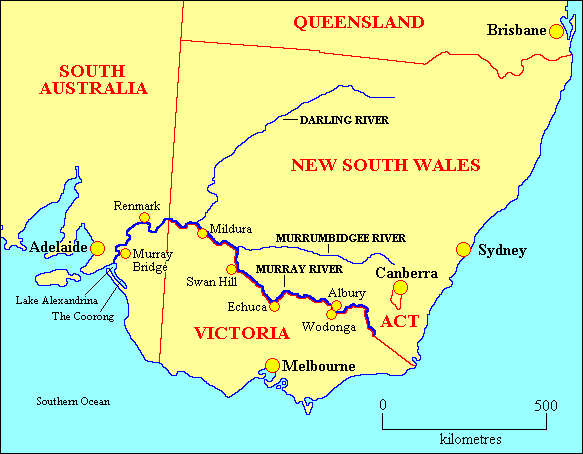
Towns such as Echuca, Moama, Mannum, Wentworth, Morgan, Mildura and Renmark prospered as river ports. By the 1860s–1910s the river trade was a major transport corridor connecting pastoral stations and irrigation districts to coastal ports and metropolitan markets. nma.gov.au+1
Typical vessels and Notable Boats
The Murray fleet was specialised: very shallow draft, relatively flat hulls, and either stern or side paddle wheels to operate in shallow, snaggy rivers.
Many named vessels survive in the historical record and in preservation
-
PS Mary Ann / Gemini / PS Marion (Randell fleet) — William Randell’s pioneering Mary Ann (1853) and later vessels from the Randell family were foundational for early river trade. PS Marion & Mannum Dock Discovery Centre+1
-
Lady Augusta — the steamer associated with Francis Cadell’s opening of steam navigation (1853). WikipediaPS Alexander Arbuthnot — one of the later built river boats and now preserved/operated from Echuca. Visit Victoria home
-
PS Emmylou, PS Canberra, PS Pevensey, PS Mayflower, PS Melbourne, PS Rothbury,
-
PS Mundoo — representative commercial and tourism vessels built in the late 19th and early 20th centuries; some were working freighters, others towing barges, and several survive in restored form or as museum/heritage boats.
To learn more go to the ARGV Musium
For an extended list of vessels and preservation status, see compiled registers of Murray–Darling steamboats.) Wikipedia
Notable Captains and River People
River navigation produced several well-known masters and families who ran fleets across generations:
William Richard Randell (Captain Randell) — pioneer owner-captain whose Mary Ann and later vessels kick-started the trade; Randell family members continued to operate steamers for many decades. Wikipedia
Francis Cadell — credited (and, in part, contested) as a commercial pioneer for his role in opening the Murray to steam navigation and for forming early navigation companies.
Australian Dictionary of Biography+1
The Pointon family (notably Alby Pointon) — 20th-century river captains/operators who restored and ran paddle steamers for both freight and later tourism purposes (e.g., PS Melbourne, Mayflower), and who exemplify the transition from commercial freight to tourism operations. Mildura Paddle Steamers+1
Many local masters and engineers — regional captains such as those listed in steamboat registers, museum collections and local histories (Echuca, Mannum, Mildura etc.) formed the working core of the industry and operated hundreds of vessels through the nineteenth and early twentieth centuries. Collections.slsa.sa.gov.au+1
What the River Carried — Cargoes and Services
The Murray trade served both freight and passenger needs. Principal cargo types included:
-
Wool — the dominant primary export of Riverina and pastoral stations in the nineteenth century; large wool consignments were regularly shipped to river ports for onward transport. Wikipedia+1
-
Timber (river red gum) — logs and sawn timber from riverine forests (Barmah, Koondrook and similar) were hauled by steamers to wharves for domestic use and construction. echucahistoricalsociety.org.au+1
-
Grain and general agricultural produce — as irrigation and farming expanded, bulk crops and store goods moved on barges and steamers. nma.gov.au
-
Livestock — droving to landing points for river movement of cattle and sheep was part of the trade. Department for Environment and Water
-
Supplies, mail and passengers — river steamers provided regular services for station supplies, mail delivery and passenger movement between isolated communities. nma.gov.au+1
-
Mail & Passengers – Essential communication and mobility service.
The Firms and Operators
Commerce on the river combined private owners, shipping agents and trading houses that organised cargo, towage and wharf operations. Examples include:
-
River Murray Steam Navigation Company — an early company formed around Cadell and partners to capitalise on river trade. Australian Dictionary of Biography
-
Permewan, Wright & Co. — one of the largest cartage and shipping agencies on the Murray in the late nineteenth century; the company operated branches, shipping agents and vessels from Echuca and other ports. Australian Dictionary of Biography+1
-
Family fleets and local operators — Randell family, Pointon family and many local owner-operators who combined boat ownership with local services and tourism in later decades. Wikipedia+1
-
Pointon family operations
-
Numerous independent owner-captains servicing stations and towns

Front view of 'P.S. Excelsior' with the 'P.S. Alpha' at Renmark, with men loading dried fruit from the packing shed onto the barge, using a chute. 1916
The Industry’s Peak and Nature of Operations
Between roughly the 1860s and the early 1900s the Murray trade reached its richest commercial activity. Estimates and contemporary accounts record dozens to hundreds of steamers and barges working the system at different times; steamers towed barges, performed snag-clearing and maintenance, and ran scheduled or ad-hoc voyages based on seasonal river conditions. The trade was regionally specialised: Echuca and Morgan were major rail and river transfer points, while Mildura, Renmark and Wentworth served irrigation and timber districts. nma.gov.au+1
.jpg)
19th-century paddlesteamer 'Queen' loading cargo (Port Adelaide Railway Museum)

The Barge Comp
Causes of Decline (late 19th century → 1980)
The fall of the Murray’s role as a primary commercial transport route was gradual, driven by several interacting causes.
The principal factors are:
-
Railway expansion (from 1860s onward)
Railway lines into the Riverina and direct rail connections to Melbourne and other markets removed the economic advantage of slow, river-dependent freight for many goods — notably wool and grain. Once rail reached Echuca (and bridges such as Echuca–Moama were completed in the 1870s), the comparative speed, reliability and year-round scheduling of trains made rail the dominant freight mode. Over the late nineteenth and early twentieth centuries rail steadily captured the major bulk trades previously carried by steamers. echucahistoricalsociety.org.au+1
-
Road transport and motor trucks (20th century)
The rise of motor vehicles and improved roads during the twentieth century provided flexible point-to-point transport for timber, livestock and general goods that had previously required wharf handling. By mid-century trucks increasingly displaced specialist river barges for many shorter-distance and time-sensitive cargos. echucahistoricalsociety.org.au+1
-
River regulation, locks, weirs and changed hydrology
Large engineering projects — reservoirs (e.g., Lake Hume), weirs, locks and barrages — were built to support irrigation and water management. While some constructions originally aimed to assist navigation, the overall effect of river regulation (including altered seasonal flows, barrages at the mouth and changed water levels) changed the river’s navigability for commercial freight and altered cargo economics. Construction of numerous locks/weirs from the early 1900s and the decision in the 1930s to abandon the remaining navigation-only works reflect a structural shift away from river freight. For an indepth look go to opal.latrobe.edu.au+2mywikis-wiki-media.s3.us-central-1.wasabisys.com+2
-
Seasonal unreliability, droughts and maintenance costs
The Murray’s variable water levels — including drought periods that made reaches impassable — meant unreliable schedules and high operating risk. Regular snagging, maintenance and dredging were expensive. Where rail and road were available, shippers preferred those more predictable modes. nma.gov.au+1
-
Economic centralisation and changing commodity patterns
As markets centralised, aggregation and distribution patterns changed: bulk grain handling, larger silos and containerised logistics favored land transport networks. Timber extraction also shifted to truck logging and mills located with road access. Victorian Collections+1
-
Transition to tourism and heritage preservation
By the mid-20th century many surviving steamers had transitioned to tourism, charters and heritage operations rather than bulk freight. Families such as the Pointons converted or restored vessels for passenger cruises, and many preserved steamers now operate as tourist attractions rather than commercial freighters. Tourism has preserved vessels but not the original freight economics of the river trade. Mildura Paddle Steamers+1
Taken together, those economic and engineering changes meant that by the interwar and post-war decades the Murray’s role shifted from an arterial freight highway toward a mixed legacy of local services, regulatory infrastructure for irrigation and, later, tourism and heritage preservation. Key moments in that trajectory include the widespread adoption of rail in the 1870s–1890s and the effective abandonment of navigation-only lock construction in 1934. echucahistoricalsociety.org.au+1
The Industry by 1980 — what remained
By 1980 commercial freight on the Murray had largely disappeared; a few towage and snagging operations continued for local needs, while a small number of steamers and barges had been preserved or repurposed for passenger cruises, exhibitions and film work. Preservation groups, museums and family operators maintained a heritage fleet centered at ports such as Echuca, Mannum and Mildura. The surviving interest was cultural and touristic rather than a continuation of the nineteenth-century commercial economy. murrayriverpaddlesteamers.com.au+2Visit Victoria home+2
Legacy and Significance
The Murray riverboat era reshaped settlement patterns, enabled Riverina pastoral and agricultural development, and created a distinct riverine culture and technological adaptation (shallow-draft paddle boats, barging systems, wharf infrastructures). Although commercial trade mostly ceased, the physical and cultural legacy — wharves, preserved steamers, museum collections, and place names — remains an important part of regional heritage, and the boats themselves continue to attract tourism and historical study. nma.gov.au+1
In Conclusion
The Murray trade between 1850 and 1980 is a clear example of how transport technologies and water-management policies interact with regional economies. Paddle steamers delivered a century of economic connectivity across an otherwise isolated inland zone; rail, roads and large-scale irrigation projects then reoriented those economies and water systems. Today the boats survive largely as heritage assets and tourist attractions, while the physical interventions that helped end commercial navigation (dams, weirs, barrages and irrigation infrastructure) continue to define the River Murray’s environmental and economic future. nma.gov.au+1
APENDIX

Detailed Chronological Timeline
1850–1860: Exploration and Proof of Navigation
1853 – Mary Ann (William R. Randell) and Lady Augusta (Francis Cadell) independently complete pioneering voyages, demonstrating that shallow-draft steamers can operate commercially on the Murray.
1854–1856 – Regular private freight and passenger services commence between Mannum, Goolwa, and upstream pastoral districts. River transport rapidly outperforms bullock drays in speed and cost.
1860–1875: Expansion and Commercialisation
1860s – Rapid construction of purpose-built paddle steamers and barges. Echuca, Mannum, Wentworth, Morgan and Albury develop wharves, warehouses, shipyards and customs facilities.
1864 – River Murray Steam Navigation Company established, representing the first major corporate consolidation of river trade interests.
1870–1878 – Railways reach Echuca and other inland centres; completion of the Echuca–Moama rail bridge (1878) marks the beginning of sustained rail competition.
1876–1900: Peak Years
1880s–1890s – High point of the river trade. Hundreds of vessels operate seasonally. Wool dominates outward cargoes; inward cargoes include stores, machinery, fencing wire and building materials.
1890s – Improved river charts, snagging programs and navigational experience increase efficiency, even as rail continues to capture premium freight.
1901–1934: Regulation and Decline Begins
1901–1902 – Federation introduces intercolonial coordination; river trade remains important but no longer dominant.
1914–1918 – World War I disrupts labour, fuel supplies and maintenance. Many vessels laid up or sold.
1920s – Construction of locks and weirs to support both navigation and irrigation. Commercial benefits are limited and costs high.
1934 – Decision by governments to abandon further navigation-only lock construction signals formal policy shift away from river freight.
1935–1980: Residual Trade and Transition
1939–1945 – World War II produces a short-lived revival due to fuel rationing, but post-war road transport quickly supersedes river freight.
1950s–1960s – Widespread adoption of trucks and sealed roads removes remaining bulk cargoes from the river.
1970s – Paddle steamers survive almost exclusively through tourism, heritage cruises and local service work.
1980 – Murray River commercial freight trade has effectively ceased.
Further Reading and Primary Sources and References
(Select sources used in this article; start points for deeper research)
-
Australian Dictionary of Biography — Francis Cadell entry (background on Cadell and the River Murray Steam Navigation Company). Australian Dictionary of Biography
-
PS Marion / Mannum Dock Discovery Centre — William Randell and the Mary Ann. PS Marion & Mannum Dock Discovery Centre
-
National Museum of Australia — “Paddle Steamer Enterprise” and Murray riverboat history. nma.gov.au
-
Victorian and South Australian heritage pages, museum and Echuca wharf documentation (detailed vessel lists and preservation status). Visit Victoria home+1
-
Scholarly sources and theses on Murray navigation and the River Murray Agreement; engineering histories of locks and weirs (for policy and hydrological changes). opal.latrobe.edu.au+1
Register of Notable Captains and Vessels
“The past is not dead, it is living in us, and will be alive in the future generations.”
WILLIAM FAULKNER